Lectures, Workshops and Research on the Politics of Listening
Rooted in her Kurdish heritage and European upbringing, Seba's practice brings together electronic music, music production, and decolonial thought to question the assumptions embedded in the tools, technologies, and musical systems we often take for granted.
Through lectures, workshops, writing, and artistic practice, Seba creates spaces to reconsider what we understand as musical, universal, correct, or "in tune." Her work connects theory with embodied listening and practical experimentation, exploring how electronic music can become a space not only for entertainment, but also for critical inquiry, cultural memory, and new forms of sonic knowledge.
2026 "Decolonize Electronic Music"
2025 "Sound"
"Electronic music is also a battlefield. Seba Kayan pushes the boundaries of music software that dictates what is considered "harmonic" or "correct." Who gets to decide? Most "Western" music software makes it difficult, if not impossible, to accurately represent Arabic or Persian tunings. Why should we accept only the Eurocentric "standard"?
Seba works with Leimma and Apotome, software developed by Khyam Allami, to finally create space for nuanced, culturally specific sounds. The workshop Decolonize Electronic Music is not only about introducing alternative tools, but about laying the groundwork for a new way of thinking."
— Mimi Maggale, Festival Curator (Sonic Territories Festival)
Decolonize Your Ears
A 4-week intensive for electronic musicians
Create your own sonic identity beyond inherited defaults. Through the Sonic Identity Method™ and the Decolonized Listening Framework, you'll explore tuning systems, challenge compositional habits, and develop a sound that feels unmistakably your own.
Seba Kayan & TINMAN
Eva Fischer
@eva0707
Curator & Festival Director · sound:frame & CIVA Festival
"She not only shifted perspectives, but also showed how much potential lies in a truly open sonic practice."
Mimie Maggale
@mimiemaggale
Curator & Festival Director · Sonic Territories
"The format makes these questions tangible — connecting critical reflection with collective listening and lived sonic experience."
pfizerpizza
@pfizerpizza
Artist
"Working with external tuning systems in Ableton became much more approachable through the hands-on examples."
Dunja
@akbild
Student, Academy of Fine Arts Vienna
"The course showed me that whether we like or dislike music is often a matter of habit — and that it is also political to perceive 'other' music as foreign."
Chaia
@chaiale
Artist
"A softer approach — how to access techniques within the DAW so the electronic sounds could be molded gently around the traditional music I sample."
Lisa
@akbild
Student, Academy of Fine Arts Vienna
"Seba made a safe space available to talk about decolonizing. By her experience in the contemporary field, the conversations are about the here and now."
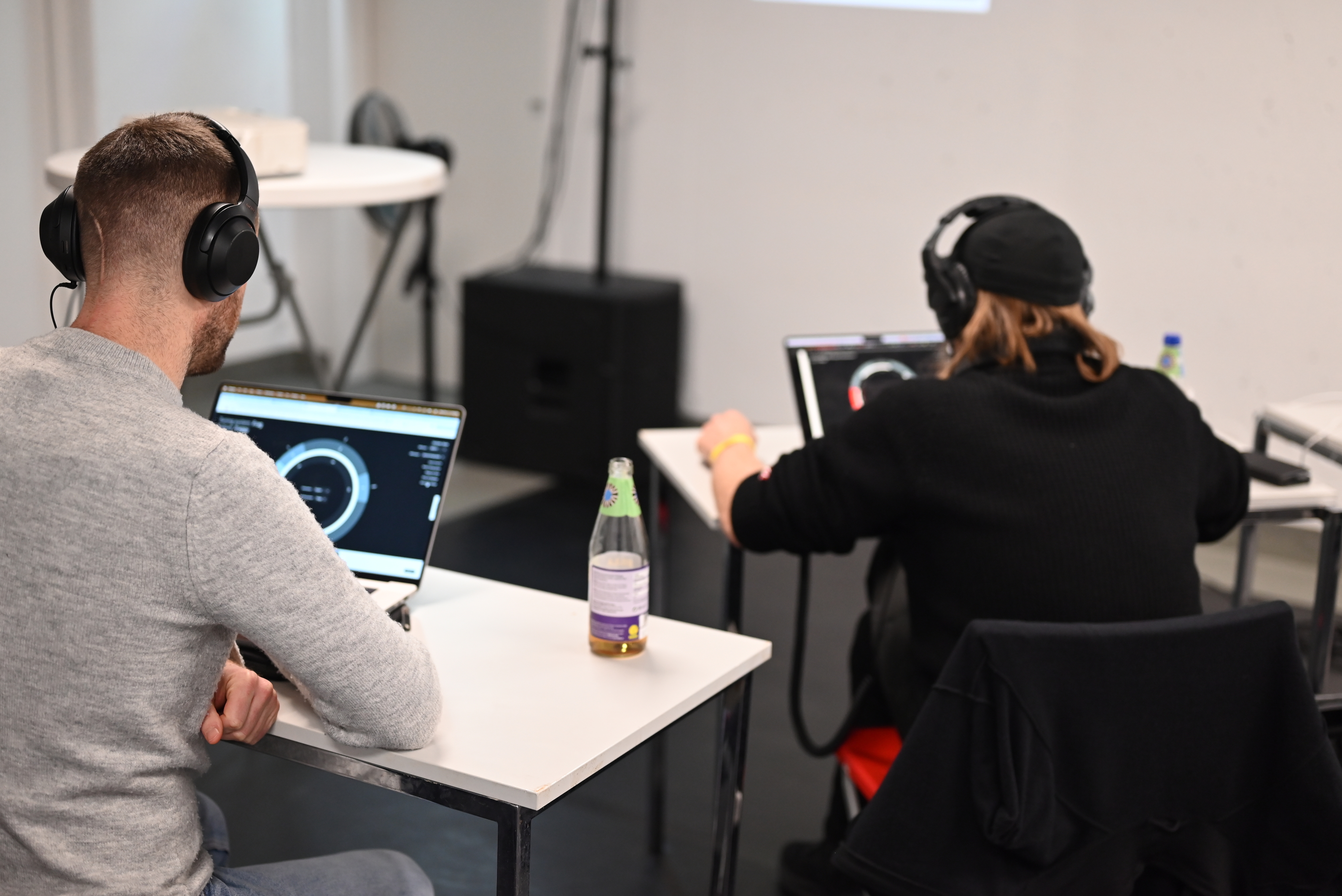

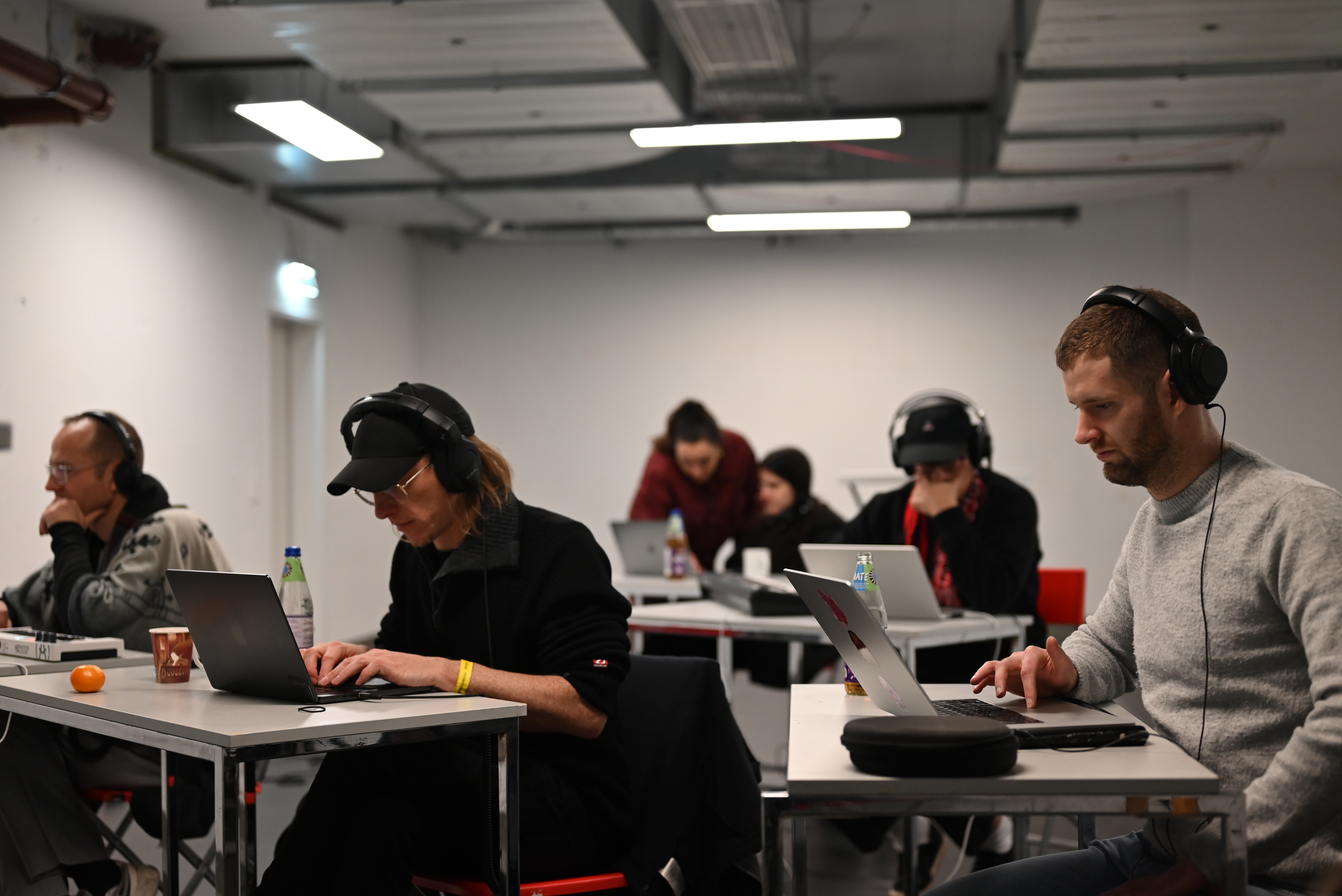
Ideas developed through my artistic, academic and teaching practice.
Decolonization Is Not a Metaphor
What happens when we apply decolonial thinking to sound? This article moves from Tuck & Yang's critique of metaphorical decolonization to the 1932 Cairo Congress and questions of standardization, maqām and musical knowledge.
Read ArticleBeyond Twelve Tones
Pitch perception, timbre and the cultural construction of musical systems. This article works between music technology, music theory, perception and cultural critique. Moving from 12-tone equal temperament into psychoacoustics, gamelan, maqām, raga and timbre.
Read ArticleYour Brain Wasn't Born Hearing Octaves
Is octave equivalence learned or innate? This article moves into psychoacoustics and cross-cultural perception, questioning the assumption that octave equivalence is simply a universal biological fact.
Read ArticleFaces Magazine
Interview with DJ and music producer Seba Kayan. A conversation on electronic music production, decolonial practice, and the politics of listening.
Read Interview.jpg)