01 — the course

Decolonize Electronic Music

Rethink how music is made.
Build a sound that isn't predefined by Western systems.

A seminar by Seba Kayan: Musicproducer & Lecturer at the Academy of Fine Arts Vienna

This seminar examines colonial power structures in the history, aesthetics, and technologies of music theory and electronic music. From an interdisciplinary perspective that brings together music history, sound studies, critical theory, and artistic practice, it analyses Eurocentrically shaped narratives of music theory and electronic music production.

In doing so, it critically interrogates dominant listening habits and modes of perception, while exploring alternative forms of production, distribution, and listening. A particular focus is placed on diasporic, Indigenous, and non-Western electronic music practices that challenge Eurocentric perspectives, destabilize normative listening frameworks, and render marginalized histories and knowledge systems audible.

proposition 01
Locus of Enunciation
Knowledge always speaks from somewhere. Decolonial work shifts attention from what is said to from where it is said — and this applies directly to the music we make and the tools we use to make it.
proposition 02
Tuning as a fundamental, often invisible foundation of music
Tuning is a fundamental yet often invisible foundation of music: the dominance of 12-tone equal temperament was not acoustically inevitable, but historically consolidated through institutions such as conservatories, missionary education, and the recording industry, which marginalized other tonal systems. As such, tuning provides a critical entry point for examining structural conditions within electronic music — shaping how music is defined, produced, and perceived, while simultaneously rendering these underlying assumptions largely invisible.
proposition 03
The DAW is Not Neutral
Programming standards — 4/4 defaults, quantization, MIDI pitch mapping, preset logic — are historically produced and aesthetically normalizing. The DAW is not a transparent window onto sound. It is a site of epistemic governance.
aims of the course
  • 01 Create awareness of cultural distortions embedded in music technology
  • 02 Initiate a shared process of reflection and change
  • 03 Focus: tuning as analytical entry point — tuning as a fundamental, often invisible foundation of music, and a key to discussing structural questions in the electronic music industry
why it matters

This seminar challenges the foundations of electronic music production. Most software we use today — from DAWs to MIDI — was built on Western musical assumptions:

  • fixed tempo grids
  • equal temperament
  • linear composition

These systems are powerful — but they are not neutral. They shape how we produce, how we listen, and ultimately how music sounds worldwide.

This course opens up those systems — and shows you how to move beyond them.

this seminar helps you

  • Find your own sonic identity
  • Challenge creative limitations
  • Engage with music beyond dominant frameworks
03 — session structure
01
Theoretical Foundations
This session introduces the conceptual framework of the seminar. We examine how electronic music technologies are shaped by historical, cultural, and economic contexts, with a focus on Western-centric assumptions embedded in production tools. A central premise is that DAWs are not neutral — they encode specific musical logics such as fixed grids, equal temperament, and linear time, which influence both creative decisions and aesthetic outcomes. Drawing on Achim Szepanski, we discuss how software environments pre-structure musical possibilities. In parallel, we revisit Wendy Carlos and her pioneering work with alternative tuning systems.
Coloniality in music & technology Non-neutrality of DAWs Standardization of rhythm & pitch Szepanski Wendy Carlos
Session 1
02
Rethinking Rhythm and Structure
We explore alternatives to fixed grids and linear timelines, drawing from diverse musical traditions and experimental practices. Participants develop rhythmic sketches that challenge standard temporal frameworks.
Polyrhythm & polymeter Cyclical & non-linear time Limits of quantization
Session 2
03
Tuning Systems and Sonic Organization
Moving beyond equal temperament, participants engage with tuning systems that offer different ways of organizing sound. We experiment with retuning digital instruments and creating microtonal material.
Microtonality & just intonation Maqam & raga Consonance across cultures Leimma
Session 3
04
Building Your Own Tuning Systems
This session shifts from analysis to construction. Participants design and implement their own tuning systems, exploring how musical logic can be redefined at the structural level. The focus is on developing reproducible and intentional sonic systems.
Custom scales & frequency relationships Mapping tuning to MIDI Apotome Ableton Live
Session 4
05
Tools, Systems, and Final Application
The final session expands from tuning to broader tool-making and workflow design. Participants explore how to modify or rethink their production environments to support alternative musical approaches — integrating tuning, rhythm, and structure into a cohesive practice.
DAW limitations & alternatives Designing alternative workflows Cohesive practice
Session 5
learning approach
Critical theory
Reading, discussion, and theoretical grounding
Listening & discussion
Guided listening from outside Western defaults
Hands-on production
Working directly in Ableton, Leimma & Apotome
System design
Not only questioning frameworks — building new ones
04 — theoretical frameworks
Walter Mignolo
Local Histories / Global Designs
Locus of enunciation — local histories as sites of knowledge the universalizing narrative of modernity renders invisible.
Frantz Fanon
Black Skin, White Masks
Colonial power operates at the level of self-perception and aesthetic judgment. The colonized subject internalizes aesthetic hierarchies as natural rather than constructed.
Fanny Gribenski
Tuning the World, 1859–1955
A=440 Hz was not a neutral acoustic decision — it was a political settlement between nation-states, military bands, broadcasting corporations, and music industries.
Achim Szepanski
Mille Plateaux Manifesto
Programming standards are neither neutral nor naturally given. They are historically grown, economically framed, and aesthetically normalizing.
Jonathan Sterne
The Audible Past
Listening is a historically and technologically situated process. Hearing itself is shaped by the apparatus and institutions through which it passes.
Eve Tuck & K.W. Yang
Decolonization is Not a Metaphor
Decolonization is not diversity work or curriculum reform — it requires material and epistemic restitution, not just expanded representation.
05 — from participants
"Coming from an indie rock background, I was already familiar with alternative guitar tunings outside of the 12-tone equal temperament, but this workshop gave me a new perspective. It was interesting to explore how these ideas can be translated into electronic music. Working with external tuning systems in Ableton became much more approachable through the hands-on examples. It gave me some fresh ideas to experiment with in my own work."
pfizerpizza workshop participant
"As an artist combining archival audio with electronics, the sounds most readily produced by my DAW sharply contrasted with my archival samples. Seba Kayan taught me a softer approach — she taught how to access techniques within the DAW so that the electronic sounds could be molded gently around the traditional music I sample."
Chaia artist · chaia.online
06 — tools and software

The seminar combines a standard production environment with specialised tools for alternative tuning and sonic exploration.

participants will work with

  • Ableton Live 12
  • Apotome
  • Leimma

Together, these tools support both critical reflection and hands-on experimentation beyond standardised music production workflows.

Ableton Live 12
The primary production framework. Participants critically engage with its grids, MIDI, and equal temperament — turning the industry-standard tool into a site of productive friction.
Apotome — isartum.net/apotome
A browser-based generative music environment for working with alternative and non-Western tuning systems. Extends Ableton by enabling tuning systems that equal temperament cannot express.
Leimma — isartum.net/leimma
A browser-based tool for exploring, hearing, and building tuning systems. No specialist knowledge required — participants begin by choosing their own reference pitch rather than inheriting A=440.
Seba Kayan working one-on-one with a participant at a Roland MIDI keyboard and laptop
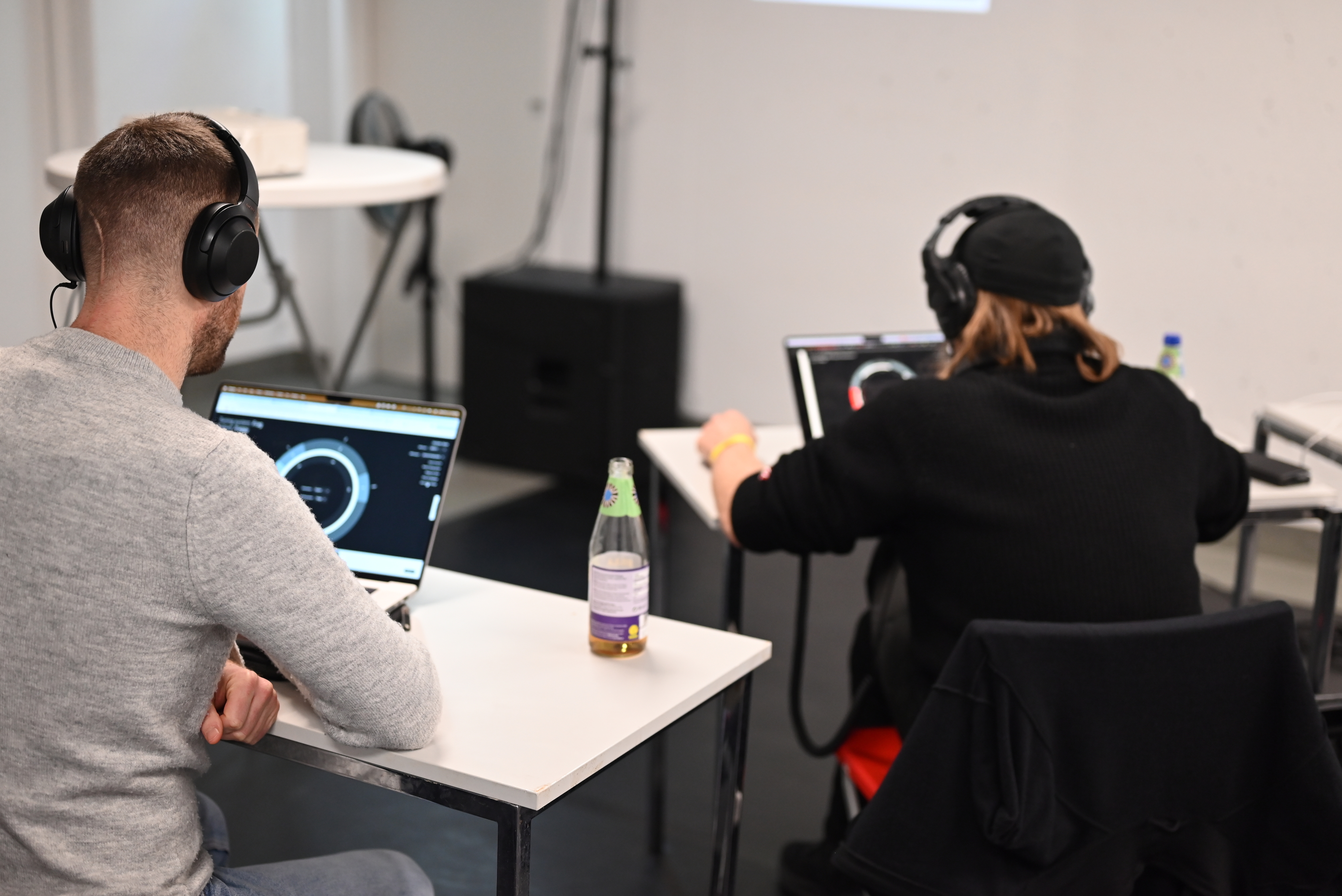
Two participants with headphones working on Apotome in Ableton Live
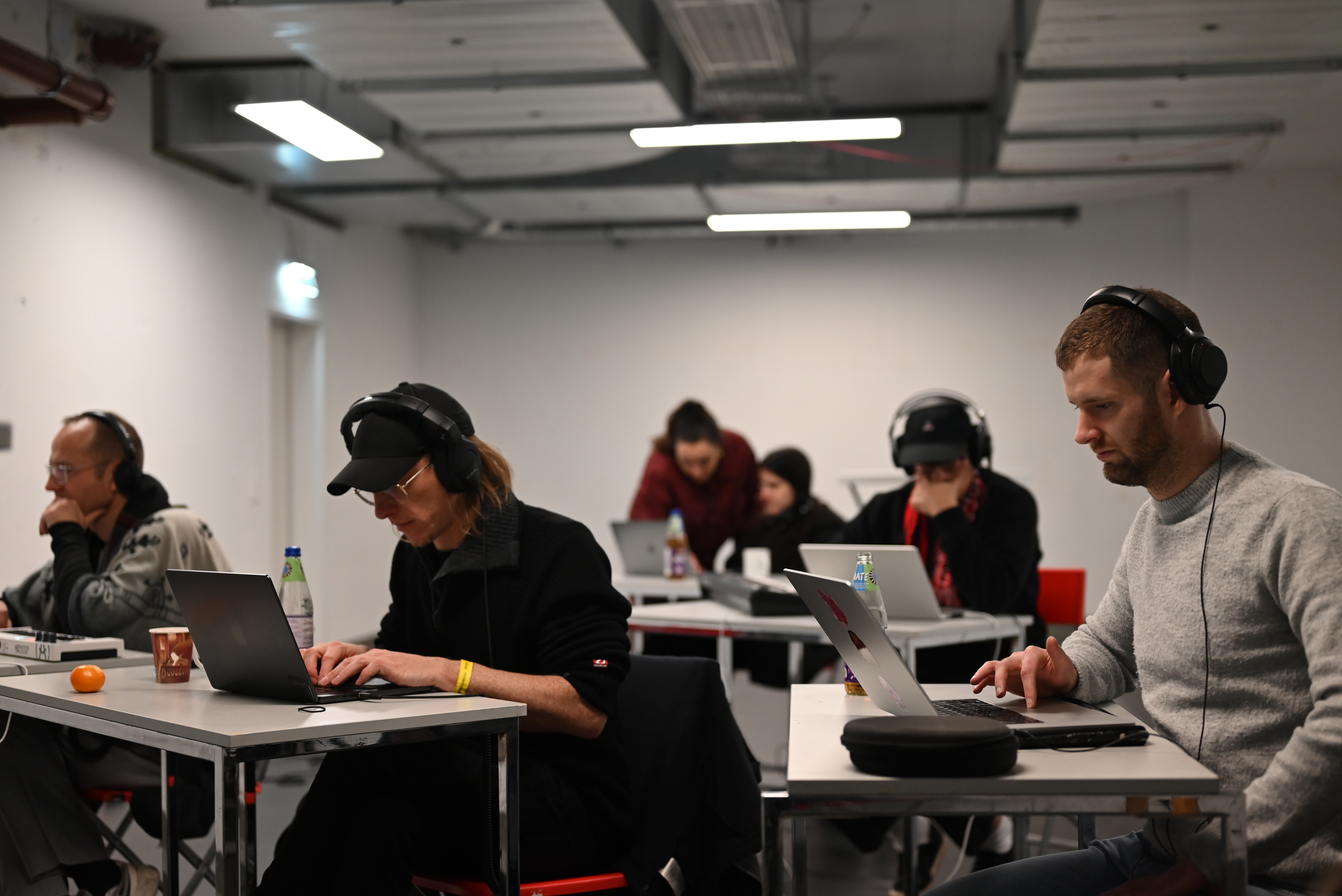
Workshop room with six participants working individually on laptops with headphones
Wide shot of participants across the workshop room, each working at a laptop
© Mario Nägele
07 — workshop formats
previously booked at
Sonic Territories Festival
previously booked at
CIVA Festival
currently lecturing at
Academy of Fine Arts Vienna
format a
Guest Workshop
A single intensive session introducing the core framework — locus of enunciation, tuning as colonial structure, DAW defaults as ideology — followed by a guided Apotome production exercise. Adaptable to any cohort size. Can be taught in English or German.
Duration: Half-day (3–4h) or Full-day (6h)
Format: In-person or hybrid
Language: EN / DE
format b
Curriculum Module
A 4–6 session arc integrated into an existing programme. Each session builds on the last, moving from theory through practice to student-led presentations. Includes reading list, slide materials, and workshop guides. Can be co-taught with existing faculty.
Duration: 4–6 sessions × 2h
Format: Seminar series
Language: EN / DE
08 — who this is for

Who this is for

  • DJs and music producers working with diasporic or non-Western music who want to integrate their own cultural heritage into their production practice
  • Artists from non-Western backgrounds who feel limited by the defaults of standard production tools
  • Electronic music production students (BA / MA) looking to expand beyond Eurocentric frameworks
  • Sound art and sonic arts practitioners
  • Music technology students seeking critical and cultural grounding
  • Anyone curious about where their sonic identity comes from — and how to build outward from it

No Prerequisites Required

  • No prior knowledge of decolonial theory — built from first principles
  • No specialist music theory background
  • No specific DAW — Leimma and Apotome run in any browser
  • Works alongside existing production curriculum
  • Adaptable from beginner through postgraduate cohorts
  • Available in English and German
book the workshop

Pick a time.
Let's talk.

Use the calendar to book a 30-minute call. We'll discuss your programme, format, and dates — no commitment required.

Prefer email?

contact@sebakayan.com
or just leave your email

I'll follow up within 48 hours.